A Place Name Is a Clue, Not a Description
Learn how to read a Florida Gulf Coast place name by checking its wording, map position and possible history without mistaking it for a landscape description.
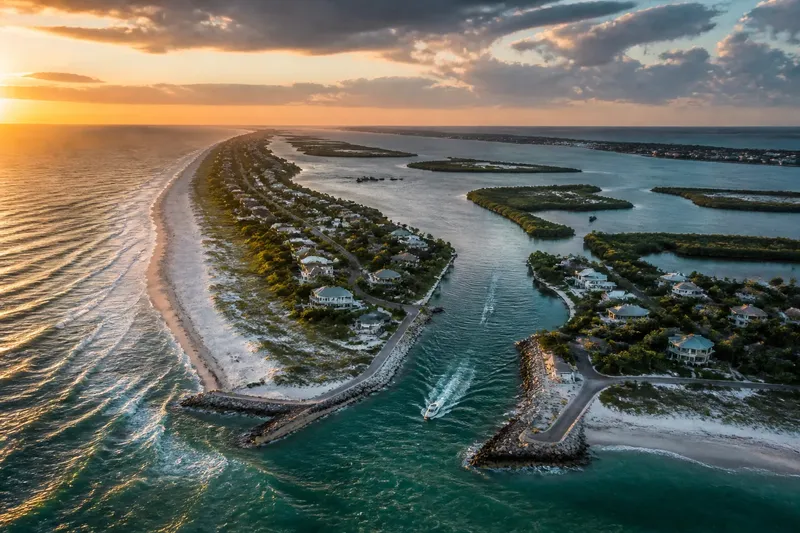
A Florida Gulf Coast place name can point towards a feature without describing what is there now. To read a place name carefully, separate its wording from its map position and its possible history; then compare each clue with the landscape you can actually see.
A name such as Cedar Key, Bay Pines or Sugarloaf may sound like a label attached to a clear physical feature. But names can persist as shorelines change, settlements grow and land is reshaped. Treat the name like a label on a drawer: useful for finding a starting point, but not proof of what the drawer contains.
What does a place name tell you?
It tells you what a person or community chose to call a place, not necessarily what defines it today. A name may refer to a plant, a landform, a person, a use, an older settlement or a feature that was once more visible.
Begin with the words themselves. Separate a compound name into parts, and note whether it suggests a natural feature, an activity or a personal association. Words such as “point”, “creek” and “island” sound descriptive, but their meaning can be broader or older than their everyday use suggests.
Do not assume the wording is literal. “Oak” in a name does not confirm that oaks dominate the site. “Harbour” does not mean that a location still provides a sheltered place for boats. The name is evidence of a naming choice, not a field guide entry.
How can you read the wording without taking it literally?
Record the name exactly as it appears on a map or sign, including spelling and any attached words such as “Old”, “New”, “North” or “Point”. Then ask what each part might refer to, keeping different possibilities separate rather than settling on the first one that sounds convincing.
Look for clues in the form of the name. A possessive or family surname may suggest an association with a person or property. A word describing a crop, material or industry may point to a past use. A feature word may have been applied loosely, or may describe a location from the perspective of an earlier mapmaker.
On the Florida Gulf Coast, water and land boundaries are especially liable to make an old label seem misleading. A creek can shift or become difficult to distinguish in developed surroundings; a point may be less pronounced than its name suggests. These observations do not establish why the name was chosen. They show where its wording and present appearance diverge.
Why does map position matter?
Map position helps identify what a name is attached to. A label placed beside a bay, street, neighbourhood or island may refer to that feature, a nearby settlement or a broader area. Check the map’s label placement and scale before treating the word as a precise boundary.
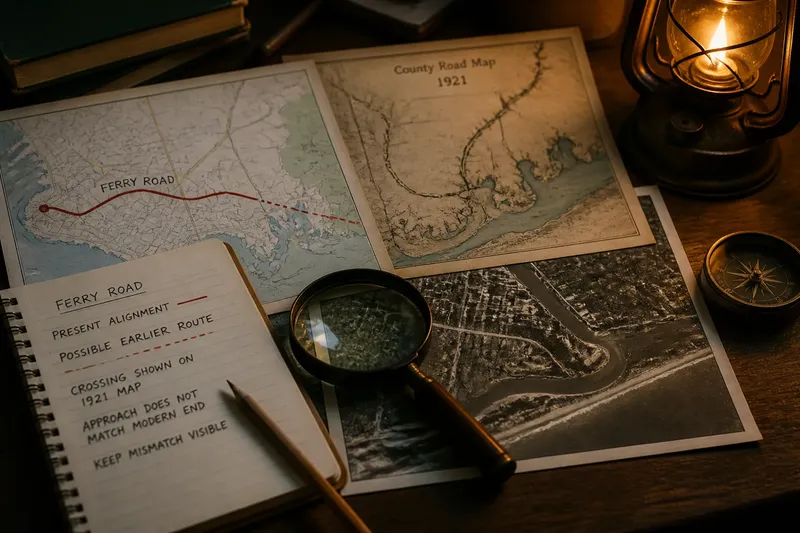
Compare more than one map if you can. A regional map may place a name over a broad area, while a street map locates it near a particular road or shoreline. A current map can also show whether the named place sits inland, beside an inlet or within a developed neighbourhood. Each view answers a different question.
Look at nearby features as well. A road, canal, bridge or shoreline can help explain the name’s location, but proximity alone does not prove a connection. Keep what the map shows distinct from what you infer: “the name appears beside the creek” is an observation; “the creek gave the place its name” is a claim about the past.
What history might sit behind the name?
Possible histories include a former land use, a family or individual association, a natural feature, a settlement name carried forward, or a name chosen to distinguish one locality from another. A name may also have been altered in spelling or shortened over time, making its present form harder to interpret.
Check local historical maps, county histories, place-name references and public archives where available. Look for a source that connects the specific name to a specific explanation, rather than one that merely repeats the name. Note whether the account identifies a date, a person, a land use or a feature, and whether another source supports the same link.
If sources disagree or offer no explanation, leave the origin unresolved. A plausible story is not the same as a documented one. You can still read the name as a clue to how people described, used or remembered the place without claiming to know the original reason.
How do you keep the name, map and history separate?
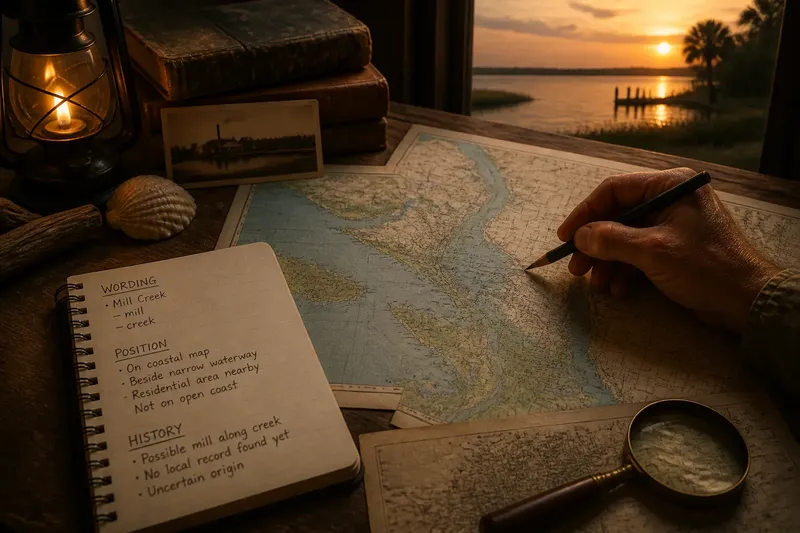
Use three short notes. Under “wording”, write what the name appears to say. Under “position”, describe where it sits on the map and what lies nearby. Under “history”, record any explanation you can trace to a source, marking uncertainty clearly.
Say you encounter the name “Mill Creek” on a coastal map. The wording suggests a mill and a creek, while the map places the label near a narrow waterway and a residential area. If a local archive contains a record linking a mill to that waterway, note that connection; without such a record, keep it as a possible interpretation rather than a fact.
This method also makes contradictions useful. If the name suggests a shore feature but the label sits inland, ask whether the map uses a broad boundary, whether the feature moved or changed, or whether the name refers to a settlement rather than the water. These are questions to investigate, not automatic explanations.
Which questions help you read a place name?
Does the name describe the landscape now?
Not necessarily. Compare its wording with visible features and a current map, then note any mismatch without assuming the landscape is wrong or the name is exact.
Can a place name refer to an area rather than a feature?
Yes. A name may identify a neighbourhood or locality that includes several streets, waterways or land uses. Use the map’s label placement and boundaries to see how broadly it is being applied.
How can you check a proposed origin?
Look for a local record or historical map that explicitly connects the name with a person, use or feature. If the source only repeats an explanation without evidence, treat the origin as uncertain.
What should you do when accounts disagree?
Record the competing explanations and the sources behind them. Do not combine them into one confident story; the disagreement may be the most accurate account available.
What should you write down after examining the name?
Keep the result brief and clear. Record the exact name, the words it suggests, its position on the map, the landscape features nearby and any source-backed history. Separate observation from interpretation so a reader can tell which points are visible and which remain possibilities.
When you read a Florida Gulf Coast place name this way, you gain more than a guess about its origin. You learn how the label relates to the present landscape, where the map leaves room for uncertainty and what local evidence could clarify next. A place name is worth following—but it should never be asked to describe the whole place on its own.